AI agents built around your business context.
An AI agent is useful when it has a defined task, the right information and clear limits. We build agents for one task at a time, connect them to the tools they need and agree with you where a person reviews or takes over.
Five things we agree before an agent goes live
Ask for review when the action is sensitive or customer-facing.
- The taskOne defined job, written down: what it receives and what it should produce.
- What it can readThe systems and approved documents it draws on, and nothing else.
- What it can doThe actions it may take on its own, and the ones that wait for a person.
- When it hands overThe cases it shouldn't handle, and who receives them.
- How it is checkedTry realistic cases, check exceptions and document how the workflow is maintained.
Where an agent helps
- A support or sales assistant that answers from your company's context.
- An employee assistant that answers routine questions from approved material.
- A meeting workflow that prepares notes and turns action items into tasks for review.
- An agent inside an agency's client project.
Some workflows need AI. Others are faster, clearer and easier to maintain with ordinary rules-based automation.
Offer AI agents to your clients without building a dedicated team
We build the agent inside your client project, behind the scenes or alongside your team, as on any agency build.
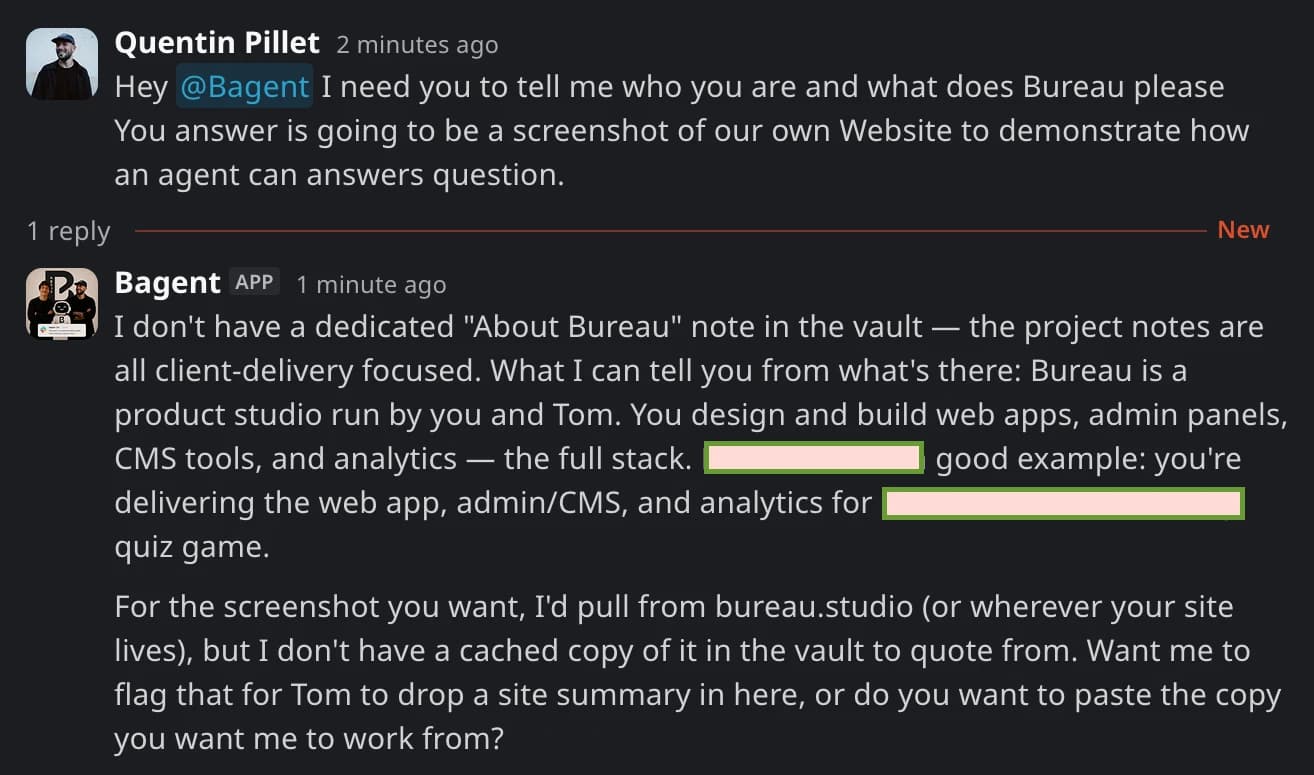
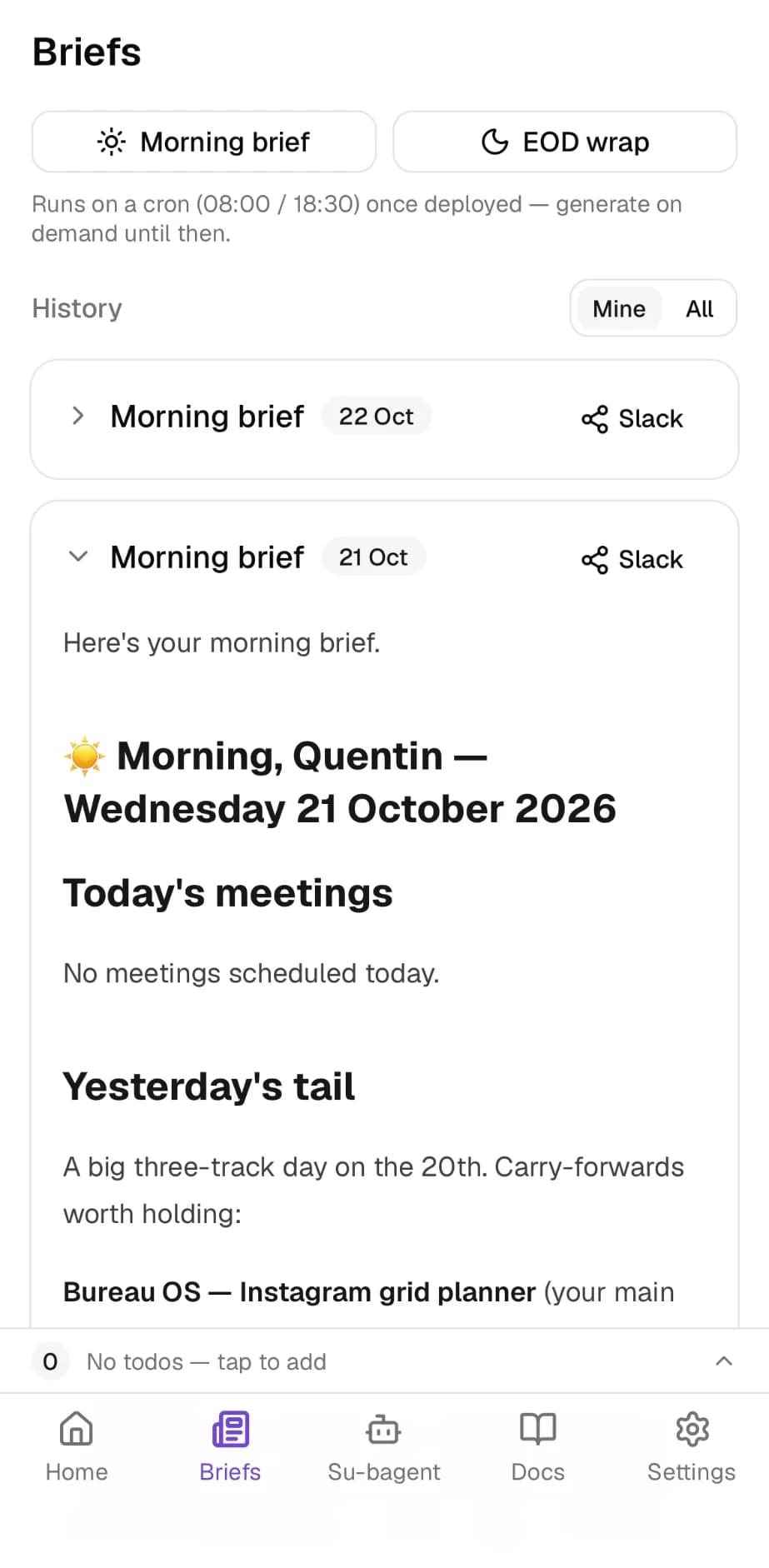
B-Agent, the agent we run ourselves
B-Agent works in our Slack. Ask it a question and it answers from our notes and project knowledge; ask it for an email and it drafts one, then waits for one of us to approve it in the channel before it is sent. In a client channel it shares only what that channel is allowed to see, and anything it adds to our notes is checked by a person first. On the phone, it writes each of us a morning brief and an end-of-day wrap.
Questions about AI agents
What is an AI agent?
A program that uses an AI model to carry out a defined task with your tools and information, and hands over to a person when its rules say so.
Will it make decisions on its own?
Only the ones agreed in advance. Sensitive or customer-facing actions go to a person first.
Do we need AI at all?
Some workflows need AI. Others are faster, clearer and easier to maintain with ordinary rules-based automation.
Which tools can it connect to?
The exact design depends on the data, systems, permissions and review steps available in your business.
What does it cost to run?
Model usage costs are estimated during scoping, before you decide.
Ways we can help
Integration
Connect the tools your business relies on and automate handoffs, updates and repetitive tasks.
Assessment
Map how work gets done, find where it slows down and identify where a process change, software, automation or AI could help.
Product build
Design and build a web product, internal tool or client portal—or help finish a project that has stalled.
Which task would you hand to an agent first?
Tell us the task, the tools involved and where a person needs to stay in charge.
Discuss an AI workflow