At Pillet Grenié Bureau, we built an assessment tool to find out which AI a company really uses. It asks your teams anonymous questions, tailored by a short questionnaire that leadership fills in first. We designed it to scope our own projects, then opened it to clients. It certifies nothing. It draws the map before you call a lawyer.
Why we first built the assessment for ourselves
Before we integrate AI for a client, we need to know what is already running. For a long time, we asked the CEO or the CTO. They gave us a list of three tools, in good faith. Then we talked to the teams and found the rest: personal accounts, browser extensions, an AI feature switched on by default in the CRM.
So we built a tool that asks the people doing the work directly. The first version had a flaw, and it taught us a lot. It asked everyone the same questions. A design agency got questions about chatbot transparency toward customers, when it has no chatbot at all. Respondents dropped off. The report turned generic.
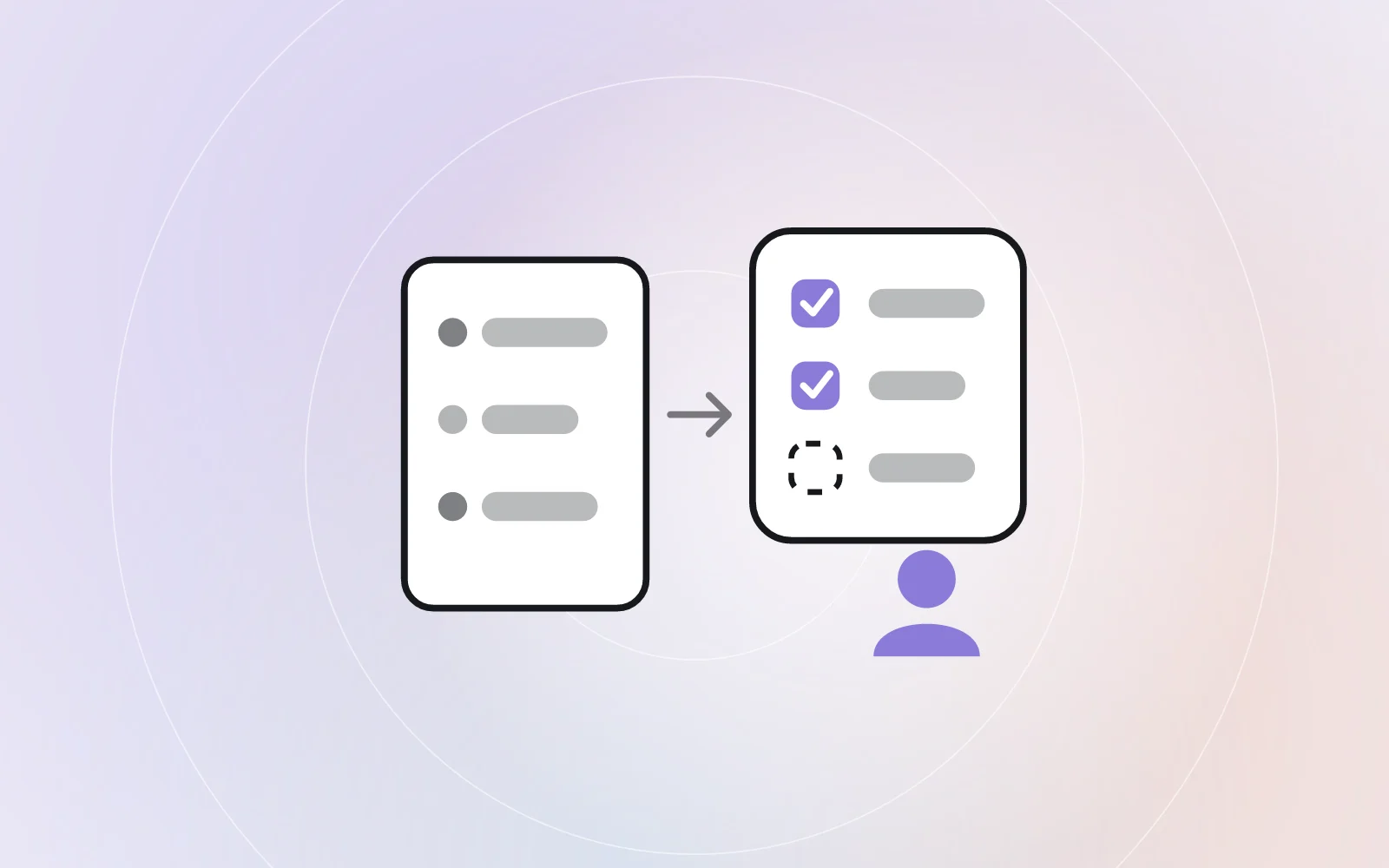
The fix takes a few minutes. Before your teams get any questions, the person launching the assessment answers four to six scoping questions. Each one offers an "I don't know" option. A "no" removes a whole family of questions. A "yes" digs deeper. An "I don't know" adds exploratory questions, and the report flags lower confidence on that point.
We took a simple rule from this. If answering "no" to a scoping question removes nothing, that question doesn't belong there. And to decide whether a topic needs scoping, we picture three different companies. If one of them would get an awkward, irrelevant question, scoping is essential.
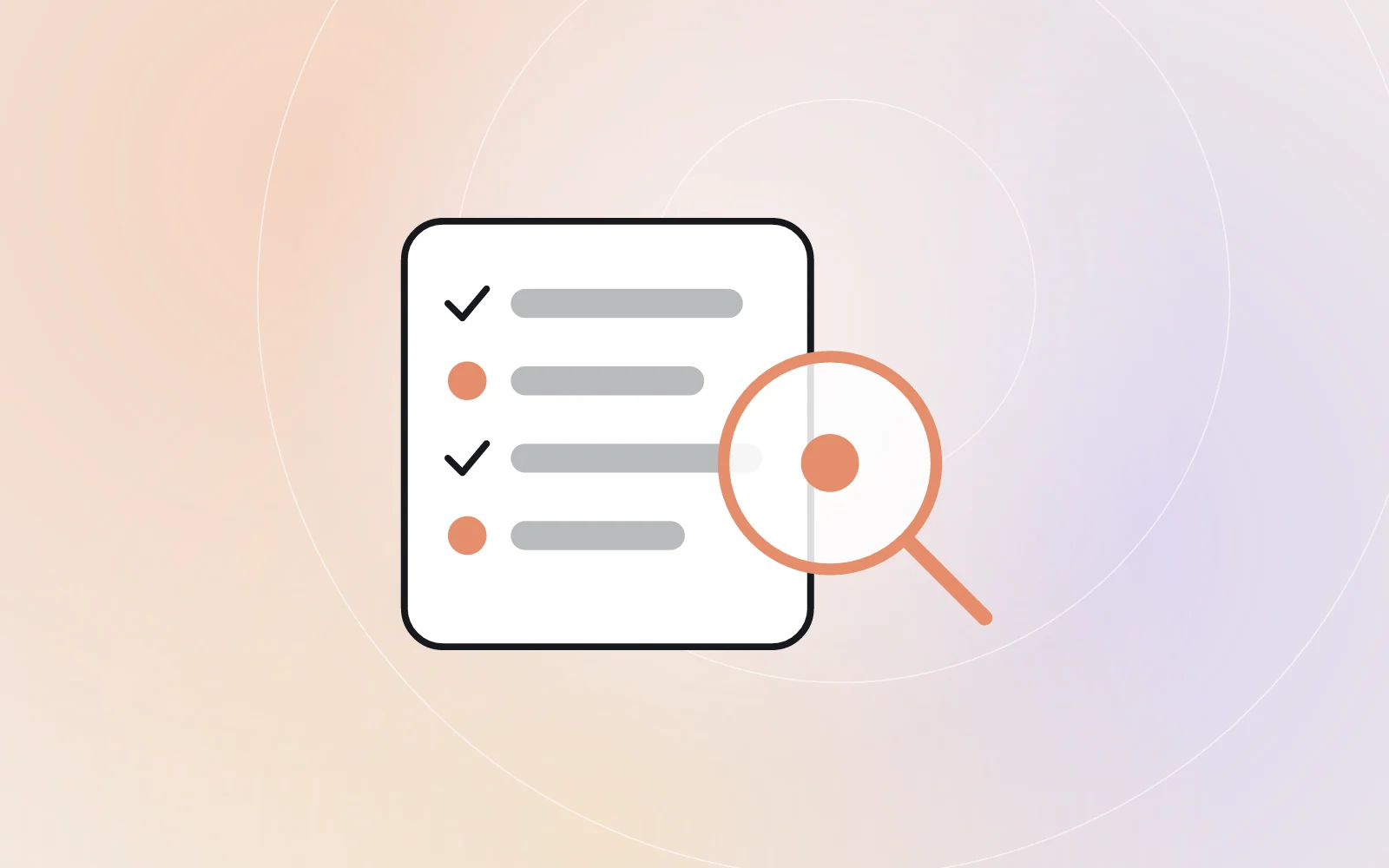
Which AI tools your teams really use (and nobody declared)
This is called shadow AI: AI running in your company without leadership knowing. We find the same families almost every time:
- personal ChatGPT or Claude accounts, used to write sales proposals;
- a coding assistant a developer turned on, outside any company contract;
- an extension that summarises meetings and sends the recordings to a third party;
- a forgotten prototype, built a year ago, still running;
- AI features your software vendors quietly added.
Why anonymous? Because nobody volunteers a tool they think is merely tolerated, or banned. And our first questions don't even mention AI. We ask how someone prepares a quote, summarises a client conversation or translates a document. The tools show up on their own in the answers.
The risk isn't theoretical. It's client data pasted into a service whose terms nobody read. It's a chatbot that doesn't say it's an AI. It's a supplier your business depends on with no contract. For each tool, the inventory records the name, the vendor, who uses it, what for, and since when.
The AI Act: what your company actually has to do, without the panic about fines
The AI Act is real, and in our reading it applies directly in every member state, with no national transposition law needed. The maximum fines exist. But for most SMEs, agencies and startups, the work is light.
What applies to almost everyone
- Article 5, prohibited practices. Social scoring, emotion recognition at work, real-time remote biometric identification. In our reading of the text, these are already prohibited. For most companies, the check is quick.
- Article 4, AI literacy. Your teams must be trained to use AI responsibly. We haven't come across a required format or certificate. In our experience, one internal session, logged in a register, can be enough.
- Article 50, transparency. If you run a chatbot, users must know they are talking to an AI. If you publish generated content, it must be labelled. Mostly, this means revising a few lines of wording.
Count on one to two days of realistic work. Not six months.
What takes real effort
The high-risk areas listed in Annex III carry heavy obligations: automated hiring, credit scoring, health, education, biometrics, critical infrastructure. For them, the timeline has been under discussion, and any change isn't law until it's published in the Official Journal of the EU. We always check the current dates before quoting one.
There's also a trap for startups. If you fine-tune an open-source model and sell it under your own brand, in our reading you may take on the role of a "provider", with very different obligations. We flag this point for your lawyer to confirm.
Our position is simple: selling urgency to a twenty-person agency is dishonest. The real reason to act is elsewhere. In our work, we increasingly see clients ask about AI governance in their tenders. Better to have the answer ready.
How an assessment runs with a client, from first question to action plan
The assessment runs in three stages over two to three weeks.
Scoping. The CEO, the DPO or the person in charge answers the scoping questions in about five minutes. They decide what your teams will see.
Team questions. Each employee gets a link and answers anonymously. First, neutral questions about their work, then targeted questions based on the scoping.
The report. You receive the tool inventory, each tool ranked by risk level and by role (provider or deployer), the gaps sorted by deadline, an action plan with owners and estimated effort, and governance recommendations.
We made the most important decision on day one: we map, we don't certify. Conformity assessment is a formal process, and a mapping exercise can't replace it. Any provider promising a certificate from a survey is selling you something else.
The guarantee that comes with it: every finding in the report cites the article it rests on. A point based on an "I don't know" answer is flagged as such. You know what is established and what still needs checking.
In practice, the result takes one of two forms. Either you find your exposure comes down to an internal training session and one sentence on your chatbot. Or you spot one or two sensitive uses, and you walk into your lawyer's office with a precise scope. Their bill then covers those cases, not discovering how your company works.
If you want to know which AI is really running in your company, start with the map.